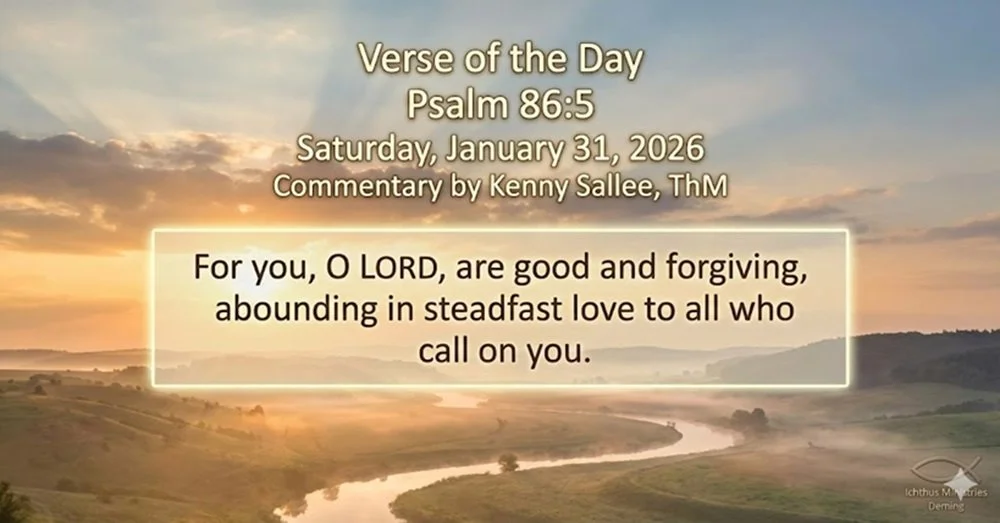
Verse of the Day
Saturday, January 31, 2026
Psalm 86:5
For you, O LORD, are good and forgiving, abounding in steadfast love to all who call on you.
Introduction
In moments of acute need or overwhelming guilt, our hesitation to approach God often stems from a distorted view of His nature. We fear that God is reluctant, indifferent, or exacting. Psalm 86 acts as a corrective lens, sharpening our focus on who God actually is.
Verse 5 is the theological anchor of this prayer. It is not merely a compliment paid to God; it is the foundational reason the Psalmist dares to pray at all. It suggests that the confidence of our prayers does not rest on our own righteousness or eloquence, but entirely on the character of the One to whom we speak.
Commentary
To fully appreciate the depth of this verse, we must look closely at the three specific attributes attributed to God.
"You... are Good"
In our modern context, the word "good" can feel generic or weak. However, in Hebrew theology, affirming that God is "good" (tov) is a profound statement of His moral perfection and His benevolence. God is not just distinct from evil; He is actively beneficial. He is the source from which all life and blessing flow. This counters the ancient (and modern) fear that the divine is capricious or must be appeased to be kind.
"Forgiving"
The Hebrew word used here implies that God is ready to forgive (sallach). It describes a posture of readiness. God is not hoarding forgiveness, waiting for us to twist His arm; rather, He stands at the ready, looking for an opportunity to release us from debt. This attribute suggests that judgment is God’s "strange work," but mercy is His native tongue.
"Abounding in Steadfast Love"
The phrase "steadfast love" translates the rich Hebrew word hesed. This is one of the most significant words in the Old Testament.
Meaning: It combines ideas of love, loyalty, covenant fidelity, and mercy. It is the love that sticks with you when you don't deserve it.
Abounding: The Psalmist adds that God is "abounding" (or plenteous) in this love. There is no scarcity in God’s economy. We cannot exhaust His supply of mercy any more than we could drain the ocean with a spoon.
Understanding the Context
Psalm 86 is unique in its setting. It is the only Psalm attributed to David in "Book III" of the Psalter (Psalms 73–89), a section dominated by the works of the sons of Korah and Asaph.
A Mosaic of Scripture: Scholars often note that Psalm 86 is a "mosaic" prayer, composed almost entirely of quotations and allusions to other parts of Scripture (Exodus, Deuteronomy, and other Psalms).
The Connection to Exodus: Verse 5 echoes the revelation of God’s name to Moses in Exodus 34:6, where God describes Himself as "abounding in steadfast love and faithfulness."
The Logic of the Prayer: The Psalm is a lament—a cry for help against enemies and despair. Yet, notice the logic: The Psalmist does not argue, "Save me because I am innocent." Instead, he argues, "Save me because You are good." The basis of the petition is God's reputation, not David's merit.
Application for Today
The Antidote to Spiritual Anxiety
Many believers struggle with the subconscious feeling that they are bothering God with their problems, or that God is disappointed in them. Psalm 86:5 invites us to dismantle this view. If God is "ready to forgive," we do not need to hide our failures. If He is "abounding in steadfast love," we do not need to fear we have used up our quota of grace.
The Condition: "To All Who Call"
There is an incredible democratization of grace in the final phrase: "to all who call on you."
It does not say, "to all who are ritually pure."
It does not say, "to all who have their theology perfect."
It says, "to all who call."
The only prerequisite for receiving this abounding love is the humility to ask for it. This makes the verse applicable to the long-time saint and the desperate beginner alike. It reminds us that prayer is the mechanism that connects our emptiness with God’s fullness.
Reflection
Consider the difference between a "scarcity mindset" and an "abundance mindset" regarding God's love. A scarcity mindset whispers that we must earn every drop of mercy and that one wrong move will cut us off.
Psalm 86:5 offers a radical alternative: An abundance mindset. It asks us to visualize a God whose goodness is the truest thing about the universe. When we approach prayer, we are not approaching a judge who needs convincing, but a Father who is already looking down the road, ready to welcome the prodigal. The barrier to access is not God's reluctance; it is often only our own silence.
The Bible texts are from the New Revised Standard Version (NRSV) Bible, copyright © 1989, 1993 the Division of Christian Education of the National Council of the Churches of Christ in the United States of America. Used by permission. All rights reserved. Verse of the Day is a daily inspirational and encouraging Bible verse, extracted from BibleGateway.com. Commentary by Kenny Sallee, ThM.
