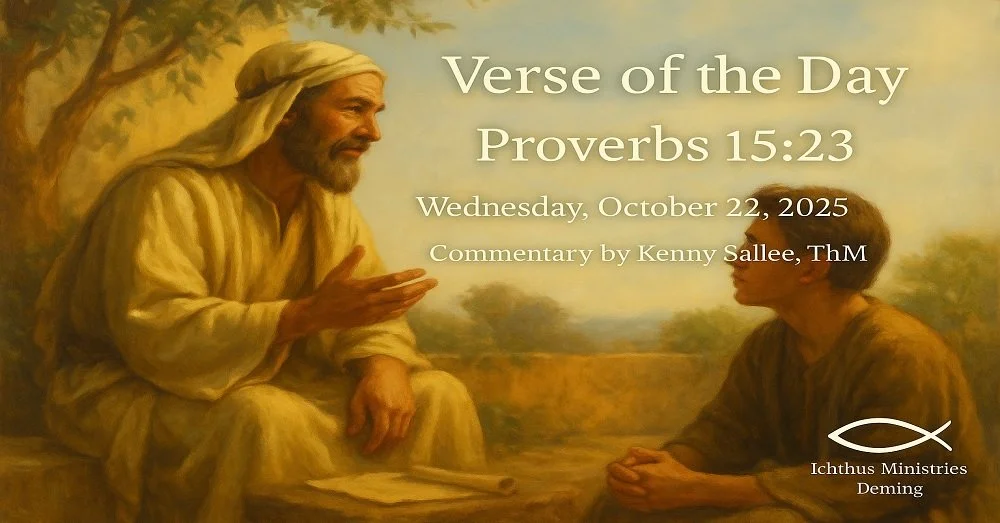
Verse of the Day
Wednesday, October 22, 2025
Proverbs 15:23
To make an apt answer is a joy to anyone, and a word in season, how good it is!
Introduction
Words carry immense power—they can heal or harm, encourage or discourage, build up or tear down. Proverbs 15:23 celebrates the blessing of speaking rightly at the right time: a word that fits both situation and spirit. In an age where speech is often hurried and reactionary, this proverb reminds believers of the enduring value of thoughtfulness and discernment in communication. Wisdom, according to Proverbs, is not merely what one says, but when and how one says it. This verse thus serves as a timeless invitation to cultivate speech that brings joy, peace, and understanding.
Commentary
The Hebrew text offers a rich texture of meaning. The phrase “apt answer” translates the Hebrew ma‘aneh peh (מַעֲנֵה־פֶּה), literally “the answer of the mouth.” This phrase conveys more than a mere reply—it suggests a response that is fitting, insightful, and well considered. It is the fruit of reflection rather than reaction, a hallmark of wisdom in Israel’s moral tradition.
The term “joy” (śimḥāh, שִׂמְחָה) signifies deep gladness or inner satisfaction. The wise speaker not only blesses others through their words but experiences joy themselves in knowing that they have spoken truth and grace at the right moment. Speech rooted in discernment is thus mutually edifying—it uplifts both the giver and the receiver.
The phrase “a word in season” (דָּבָר בְּעִתּוֹ, dābār be‘ittō) is particularly evocative. The Hebrew ‘ēt (עֵת) refers to an appointed or appropriate time, underscoring the importance of timeliness in wisdom. Even a good word, if spoken out of season, can fail to edify or may even wound. The proverb concludes with the exclamation, “how good it is!” (mah-tov, מַה־טּוֹב), emphasizing the intrinsic goodness—moral and emotional—of well-timed, thoughtful communication.
Within the theology of wisdom literature, this verse aligns with the conviction that speech reveals character (cf. Proverbs 10:19–21; 12:18; 25:11). Right words are not accidental; they flow from a heart attuned to God’s wisdom.
Understanding the Context
Proverbs 15 as a whole contrasts the speech and attitudes of the wise with those of the foolish. It opens with, “A soft answer turns away wrath, but a harsh word stirs up anger” (v.1), setting a thematic tone for the chapter. Throughout, the author emphasizes that words are moral acts—expressions of one’s inner disposition and reverence for the Lord.
Verse 23 fits naturally within this larger framework of relational ethics. The wise person’s speech brings life and healing (v.4), while the fool’s words cause strife and destruction (v.18). Ancient Israelite culture, like ours, understood that communication formed the fabric of community life. A timely word could restore harmony, mend divisions, or convey understanding where there was confusion. The proverb, therefore, is not about cleverness or eloquence, but about wisdom’s moral dimension: using one’s speech to align with righteousness, mercy, and truth.
The broader literary structure of Proverbs portrays speech as a divine stewardship. To speak “in season” is to participate in God’s own ordering of time and purpose (cf. Ecclesiastes 3:1). Thus, this simple statement holds profound theological implications: our words, when guided by wisdom, become instruments of divine goodness in a fractured world.
Application for Today
In contemporary life, communication is instant and constant. The immediacy of digital platforms has eroded the pause once afforded for reflection. Proverbs 15:23 invites believers to reclaim the sacred pause—to listen, to discern, and then to speak in ways that bless rather than burden.
Practically, this may mean offering a gentle word of encouragement when someone is weary, refraining from criticism when emotions run high, or speaking truth with compassion in moments of correction. In families, such discernment nurtures peace; in churches, it fosters unity; in workplaces, it models integrity.
The “apt answer” does not depend on rhetorical skill but on spiritual attentiveness. The Holy Spirit enables believers to perceive when and how to speak, transforming ordinary conversation into acts of ministry. The result is not only joy to the speaker but healing to the hearer—a reflection of Christ, whose words were always “full of grace and truth” (John 1:14).
Reflection
Proverbs 15:23 challenges us to evaluate the rhythm and intention of our speech. Are our words measured, gracious, and timely? Do they bring joy, or do they wound? The wise believer learns that silence can be as powerful as speech, and that the right word—spoken in the right spirit and season—can echo long after it is uttered.
This proverb calls for a sanctified mindfulness of the tongue, reminding us that wisdom is not only seen in what we do but heard in what we say. In a world filled with noise, the goodness of a well-timed word still shines as a reflection of God’s wisdom and love.
The Bible texts are from the New Revised Standard Version (NRSV) Bible, copyright © 1989, 1993 the Division of Christian Education of the National Council of the Churches of Christ in the United States of America. Used by permission. All rights reserved. Verse of the Day is a daily inspirational and encouraging Bible verse, extracted from BibleGateway.com. Commentary by Kenny Sallee, ThM.
