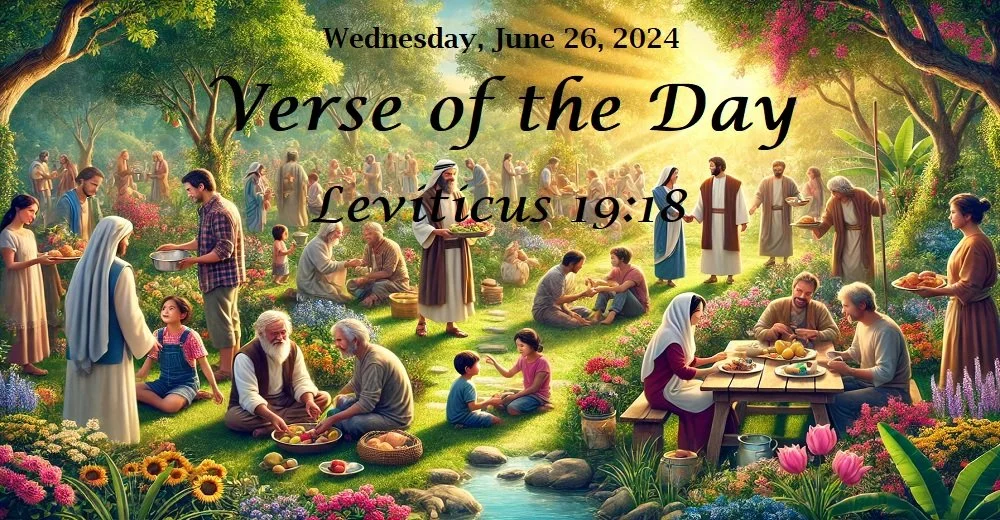
This image captures the essence of Leviticus 19:18, depicting a diverse group of individuals engaging in acts of kindness and community support in a lush garden setting. It visually embodies the commandment to "love your neighbor as yourself."
Leviticus 19:18
You shall not take vengeance or bear a grudge against any of your people, but you shall love your neighbor as yourself: I am the LORD.
Introduction
Leviticus 19:18, nestled within the Holiness Code of the Book of Leviticus, is a pivotal verse that articulates significant moral and ethical directives central to Jewish and Christian teachings. This verse is particularly renowned for its commandment to "love your neighbor as yourself," encapsulating the essence of ethical conduct and interpersonal relationships expected within the community of Israel.
Commentary
The verse serves as a fundamental ethical injunction that emphasizes forgiveness and the imperative of love towards one's neighbor. Within the context of Leviticus, this commandment is part of a larger framework that outlines how the Israelites are to live holy lives, distinct from the surrounding nations. The Holiness Code (Leviticus 17-26) is not just a collection of random laws but a coherent set of directives that shape a community dedicated to holiness and justice.
“You shall not take vengeance or bear a grudge”
This part of the verse addresses the human tendency towards retaliation and harboring resentment. It calls the faithful to rise above personal vendettas and to seek reconciliation and peace instead.
“Love your neighbor as yourself”
This command elevates the ethical discourse by making love the cornerstone of social relationships. The standard for this love is one's love for oneself, implying that the care, respect, and goodwill we naturally seek for ourselves should be extended to others.
“I am the LORD”
This phrase grounds the ethical mandate in the character and authority of God. It reminds the Israelites that their ethical behavior is not just a social contract but a divine requirement rooted in their covenant relationship with God.
Understanding Context
To fully grasp the depth of Leviticus 19:18, it is essential to understand its place in the broader narrative of the Pentateuch. The Israelites, having been delivered from Egypt, are being formed into a covenant community that reflects the holiness of God. The laws in Leviticus serve to set them apart, both morally and ritually, from other nations. The command to love one’s neighbor reflects God’s own nature and His desire for a just and compassionate society.
In the New Testament, Jesus famously reiterates this commandment, linking it with the Shema from Deuteronomy 6:4-5 to form the greatest commandment: love God and love your neighbor (Matthew 22:36-40). This connection underscores the timeless and universal application of this principle.
Application for Today
In contemporary society, Leviticus 19:18 continues to resonate as a foundational ethical principle. The call to reject vengeance and embrace love is particularly relevant in a world often marked by division, conflict, and individualism. Here are some ways to apply this verse today:
Personal Relationships: Strive to forgive those who have wronged you and to let go of grudges. This fosters inner peace and healthier relationships.
Community Engagement: Engage in acts of kindness and compassion within your community. Seek to understand and support your neighbors, especially those who may be marginalized or in need.
Conflict Resolution: In situations of conflict, whether personal, communal, or even global, prioritize reconciliation and restorative justice over retaliation.
Church Life: As members of a faith community, embodying this command can transform church life, making it a place of genuine care, support, and mutual respect.
Reflection
Reflecting on Leviticus 19:18 invites us to examine our own hearts and relationships. Consider the following questions:
Are there any grudges or feelings of vengeance that you are holding onto? How can you begin to release these and move towards forgiveness?
How can you practically demonstrate love to your neighbors, both those who are easy to love and those who are challenging?
In what ways does understanding God’s holiness inspire you to pursue ethical living and to reflect His love in your daily actions?
By meditating on these questions and striving to live out the commandment to love our neighbors as ourselves, we align ourselves with the heart of God and His vision for a just and holy community.
The Bible texts are from the New Revised Standard Version (NRSV) Bible, copyright © 1989, 1993 the Division of Christian Education of the National Council of the Churches of Christ in the United States of America. Used by permission. All rights reserved. Verse of the Day is a daily inspirational and encouraging Bible verse extracted from BibleGateway.com. Commentary by Kenny Sallee, ThM.
