The Daily Devotional
Saturday, January 31, 2026
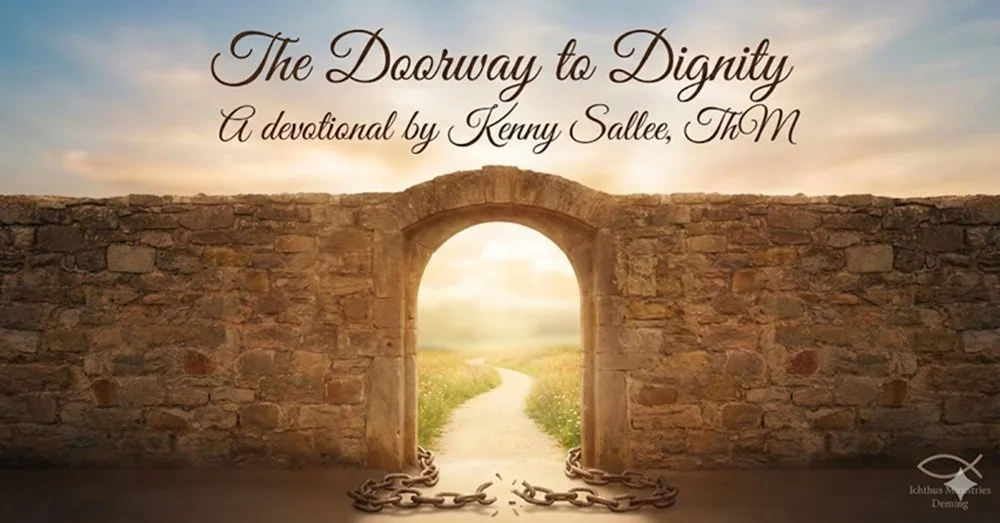
The Doorway to Dignity
“Is not this the fast that I choose: to loose the bonds of injustice, to undo the thongs of the yoke, to let the oppressed go free, and to break every yoke?” — Isaiah 58:6
Introduction
The prophet Isaiah speaks to a people who are religious in ritual but negligent in justice. They ask God why He hasn’t noticed their fasting, and God replies with a stunning correction: true devotion isn't just about personal piety; it is about the public welfare of our neighbors. God’s heart is undeniably bent toward liberation—He desires to see heavy burdens lifted and human dignity restored.
We saw a glimpse of this divine desire echoing through history on January 31, 1865. On that day, the United States House of Representatives passed the 13th Amendment to the Constitution. While the Emancipation Proclamation had been issued two years prior as a wartime measure, it was this legislative act—passed by a slim margin amid intense debate—that set the stage for the permanent legal abolition of slavery (fully ratified later that December). It was a moment where the laws of man began to bend, however imperfectly, toward the laws of God. Today, we reflect on what it means to participate in God's work of "breaking every yoke."
Reflection
Freedom is a word we use often, usually to describe our ability to do what we want, when we want. But in the biblical sense, freedom is far weightier. It is not merely the absence of chains; it is the presence of dignity. It is the restoration of the imago Dei—the Image of God—in every human being.
Consider the experience of a temporary employee in a large corporate office. Imagine a worker named David who has been a "contractor" for years. He sits in the same cubicles as the full-time staff, does similar work, and eats in the same cafeteria. Yet, there is a distinct, invisible wall. He wears a different color badge. He is not invited to the strategic planning meetings. He has no health benefits, no paid time off, and lives with the constant, low-level anxiety that his contract could be terminated without explanation on a Friday afternoon.
Technically, David is free to leave. But practically, he is in a position of vulnerability and exclusion. He is used by the company, but he does not belong to the community.
Now, imagine the day David is finally offered a permanent position. He signs the paperwork. He gets the new badge. Suddenly, the anxiety lifts. He has a voice in the meetings; he has security for his family; he is seen as a peer rather than a utility. The change in status changes his entire posture. He walks taller. He speaks more freely. He has moved from being a tool of production to being a member of the body.
While we must be careful not to equate modern employment issues with the horrors of chattel slavery, the dynamic of dignity remains relevant. The 13th Amendment was a legislative "new badge." It was the legal declaration that millions of human beings could no longer be treated as tools, property, or temporary utilities, but must be recognized as persons.
God’s justice is always about moving people from exclusion to belonging, from objects to subjects, from "it" to "thou." When the House passed that amendment in 1865, they were participating in the work Isaiah described: undoing the thongs of the yoke.
For us today, Christian freedom entails a responsibility. If we are free in Christ, we are free for others. We are called to look at our world—our neighborhoods, our supply chains, our workplaces—and ask: Who is being treated as a tool rather than a person? Who is wearing the badge of exclusion? The work of abolition did not end in 1865; it continues whenever we advocate for the dignity of the vulnerable.
Application
The challenge for us today is to identify where we might be inadvertently contributing to someone else’s "yoke" or where we have the power to lift one.
Your Action Step: Identify a "gatekeeper" situation in your life this week. This could be in your workplace, your homeowners' association, or a volunteer group. Ask yourself: Is there a policy or a habit here that makes it harder for a specific group of people to participate or flourish?
Take one concrete step to widen the door. It might be:
Advocating for a coworker whose voice is often interrupted or ignored in meetings.
Reviewing how you tip service workers or cleaners, ensuring your generosity affirms their dignity, not just their utility.
Reading a book or article about modern-day labor trafficking to understand how "bonds of injustice" still exist in the products we buy.
Use your freedom to ensure someone else feels seen, heard, and valued today.
Conclusion
The passage of the 13th Amendment reminds us that systems can change, and that God uses human hands to write history that bends toward justice. We are not called to be passive observers of freedom, but active participants in it. As we walk through our day, let us carry the hope that chains can be broken—whether they are made of iron, unjust laws, or hard-hearted prejudices. May we be people who, having received the grace of Christ, work tirelessly to ensure that same dignity is extended to everyone we meet.
Prayer
Gracious and Liberating God, we thank You that You are the breaker of chains and the restorer of souls. We thank You for the history of those who labored, prayed, and voted to end the scourge of slavery in this land, and we acknowledge the deep wounds that remain. Lord, forgive us for the times we have been content with our own comfort while ignoring the bonds of injustice on our neighbors.
Give us eyes to see the dignity in every person we encounter today. Grant us the courage to speak for those who are silenced and the humility to listen to those who have been oppressed. May our lives be living testaments to Your freedom—a freedom that serves, loves, and restores.
In the name of Jesus, who came to set the captives free, Amen.
Devotional by: Kenny Sallee, ThM — Deming, NM, USA
The Bible texts are from the New Revised Standard Version (NRSV) Bible, copyright © 1989, 1993, the Division of Christian Education of the National Council of the Churches of Christ in the United States of America. Used by permission. All rights reserved.
