The Daily Devotional
Sunday, February 2, 2025
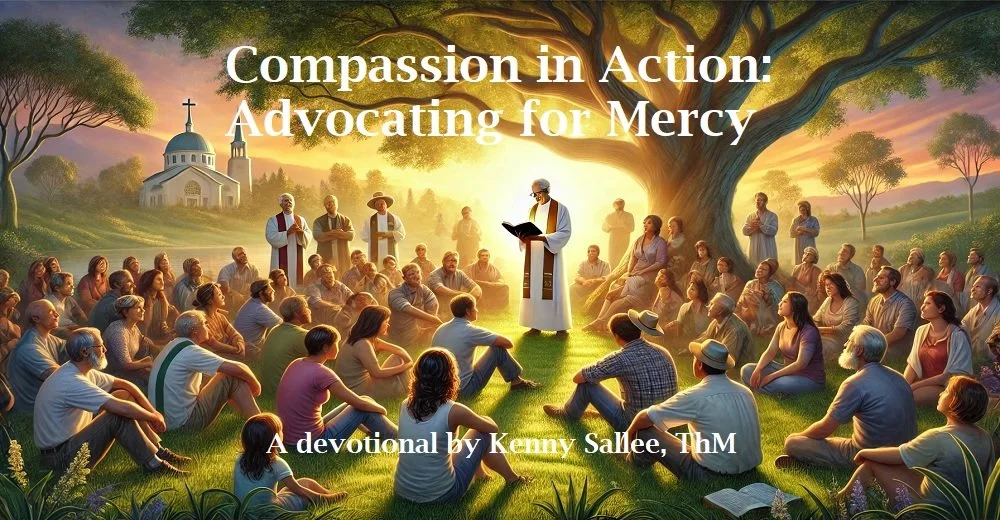
Compassion in Action: Advocating for Mercy
Thus says the LORD: Act with justice and righteousness, and deliver from the hand of the oppressor anyone who has been robbed. And do no wrong or violence to the alien, the orphan, and the widow, or shed innocent blood in this place. (Jeremiah 22:3)
Introduction
The Bible consistently calls us to seek justice and show mercy. Jeremiah’s prophetic words challenge leaders and individuals alike to ensure the vulnerable and marginalized are treated with dignity and fairness. This extends beyond personal morality to societal structures and policies, urging us to advocate for compassion even when it may seem countercultural.
Reflection
Throughout Scripture, God demonstrates a heart for those on the fringes of society—aliens, orphans, widows, and the oppressed. Jesus Himself embodied this compassion, eating with tax collectors, speaking to the Samaritan woman at the well, and healing those excluded from the community. The Apostle Paul echoed this, declaring that in Christ, “there is no longer Jew or Greek... slave or free... male and female” (Galatians 3:28).
An illustration of mercy and advocacy comes from the story of Corrie ten Boom during World War II. Her family risked their lives to shelter Jews from persecution. When asked why they defied the government, Corrie explained that their allegiance was to God’s law of love above all else. Today, we are presented with different but equally challenging calls to show compassion, such as advocating for LGBTQ+ individuals and undocumented workers who face systemic injustices.
This is not about compromising beliefs but reflecting Christ’s mercy by standing against oppression and seeking ways to extend grace and fairness to all. Advocating for mercy can be a witness to God’s inclusive love, which calls us to act as agents of reconciliation in a broken world.
Application
1. Pray for Guidance: Ask God for wisdom to navigate these sensitive topics with grace, balancing truth and love.
2. Engage with Empathy: Build relationships with individuals from marginalized communities. Listen to their stories to understand their challenges.
3. Advocate for Change: Write letters to local officials or support organizations that promote fair policies for undocumented workers and protect the dignity of all people.
4. Model Christ’s Love: Be a safe and welcoming presence for those who feel ostracized or misunderstood. Reflect the inclusive heart of God in your words and actions.
Conclusion
Showing mercy to marginalized communities—whether the LGBTQ+ community or undocumented workers—is not unbiblical; it’s profoundly biblical. God’s justice is deeply intertwined with mercy, calling us to love others as He has loved us. As Christians, we are called to be the hands and feet of Jesus, standing in solidarity with the vulnerable and advocating for policies that reflect the kingdom of God on earth.
Prayer
Heavenly Father, thank You for Your boundless mercy that knows no limits. Teach us to act justly, love mercy, and walk humbly with You. Open our hearts to love those who are different from us and to stand with the oppressed. Grant us the courage to advocate for fairness and compassion, even when it’s difficult. Let our actions reflect Your love, so the world may know Your grace. In Jesus’ name, we pray. Amen.
Is It Unbiblical?
Advocating for mercy is entirely biblical when aligned with God’s call to justice and compassion. It’s not about affirming everything but about embodying the love of Christ in ways that reflect His care for the vulnerable.
Devotional by: Kenny Sallee, ThM — Deming, NM, USA
The Bible texts are from the New Revised Standard Version Bible (NRSV)© 1989, 1993, the Division of Christian Education of the National Council of the Churches of Christ in the United States of America. Used by permission. All rights reserved.
